Website designed with the B12 website builder. Create your own website today.
Start for free
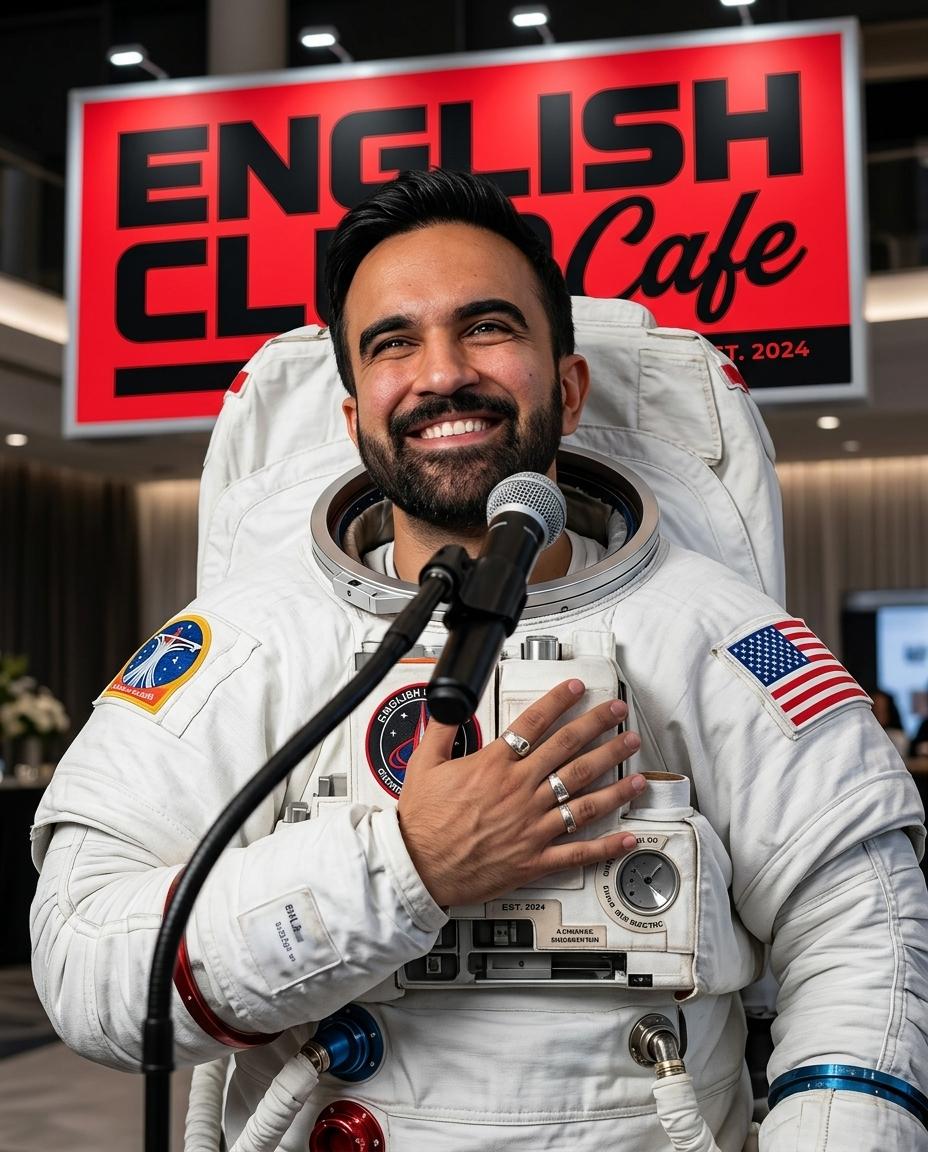
There are moments in history when politics becomes more than politics.
It becomes a mirror.
It reflects what a society fears, what it desires, what it has forgotten, and—perhaps most importantly—what it still hopes to become.
New York City has always been a fascinating place to observe those contradictions. It is one of the richest cities on Earth and, at the same time, a place where millions of people struggle with rent, childcare, transportation, food prices and the extraordinary cost of simply existing.
And then, in 2025, something unexpected happened.
A relatively young politician with an unusual biography, a distinctly modern communication style and an unapologetically progressive political program went from being relatively unknown outside Queens to becoming one of the most recognizable political figures in the United States.
His name was Zohran Mamdani.
On January 1, 2026, at the age of 34, he became New York City's 112th mayor—and the city's first Muslim mayor and first South Asian mayor. He had been born in Kampala, Uganda, moved to New York with his family when he was seven, attended public school in the city, studied Africana Studies at Bowdoin College and became a U.S. citizen in 2018.
But perhaps the most interesting part of the story isn't his résumé.
It is the idea behind the story.
Because Mamdani's rise raises a question that goes far beyond New York:
Can politics still make people believe in the future?
Every political biography contains a story.
Mamdani's happens to cross continents.
He was born in Kampala, Uganda, into a family deeply connected to culture and intellectual life. His father, Mahmood Mamdani, is an academic, while his mother, Mira Nair, is an internationally acclaimed filmmaker known for works including The Namesake and Mississippi Masala.
When Zohran was seven, his family moved to New York.
That detail matters because the American Dream is often discussed as an economic concept: work hard, succeed, buy a home, move up.
But there is another version of the American Dream.
It is the idea that a person can arrive from somewhere else and eventually participate in shaping the place they now call home.
Mamdani's story embodies that version in a particularly powerful way.
He eventually represented neighborhoods in Queens, including Astoria, before becoming mayor of the entire city. Before entering elected office, he worked as a foreclosure-prevention housing counselor, helping homeowners facing eviction.
That experience seems relevant to understanding his politics.
Before talking about housing as a politician, he had encountered housing insecurity as a counselor.
Before talking about affordability as a slogan, he had seen what unaffordability could do to ordinary people.
And perhaps that explains one of the defining characteristics of his political message:
He talks about economics through human experiences.
Political discussions can become incredibly abstract.
GDP.
Inflation.
Tax rates.
Fiscal policy.
Interest rates.
Budgets.
Deficits.
But people don't experience an economy through a spreadsheet.
They experience it when the rent arrives.
When the supermarket bill is higher.
When daycare costs more than expected.
When the commute takes ninety minutes.
When a salary disappears before the end of the month.
Mamdani built much of his political identity around precisely those everyday pressures.
His inaugural address translated several of his central proposals into ordinary experiences: freezing rents for rent-stabilized tenants, making buses faster and free, and expanding universal childcare.
Whether every proposal will work exactly as intended is a legitimate question.
It should be.
A democratic society should debate costs, implementation, unintended consequences and alternatives.
But there is something powerful about a political message that begins with a simple question:
"Can ordinary people afford to live here?"
That question is not ideological.
It is human.
There is another lesson here.
Mamdani's politics has been characterized by ambition.
Rent freezes.
Free buses.
Universal childcare.
Affordable housing.
Municipal grocery stores.
Immigrant inclusion.
These aren't small proposals.
They are enormous administrative, financial and political challenges.
And that creates an important tension.
Hope without execution is merely rhetoric.
A leader can inspire millions of people with a vision, but eventually the vision has to survive contact with reality.
That is where Mamdani's administration is now being tested.
For example, his administration's childcare expansion has moved from campaign promise toward implementation, while the city has also faced funding and administrative challenges. The mayor's office says the program is expanding, including a pilot for two-year-olds, while reporting in August 2026 has highlighted delays affecting providers.
The lesson is bigger than Mamdani.
Ideas need both imagination and execution.
Dreaming is necessary.
Building is harder.
Few ideas illustrate this tension better than municipal grocery stores.
The concept is relatively simple: the city would operate subsidized grocery stores intended to offer essential products at lower prices.
Mamdani's administration has announced a plan for five city-owned grocery stores, with one planned for each borough by 2029. In July, the administration announced discounts of up to 30% on selected products at its municipal grocery initiative.
But the idea has generated fierce opposition.
Business groups argue that government-subsidized stores could unfairly compete with small, immigrant- and minority-owned supermarkets. In August 2026, a New York business group filed lawsuits challenging the plan. The administration argues that the program is necessary to address the cost-of-living crisis.
And here we encounter something important about democracy:
A hopeful idea does not become a good idea simply because it sounds hopeful.
It has to be tested.
Measured.
Criticized.
Improved.
Perhaps the grocery stores will work.
Perhaps they will need significant changes.
Perhaps some of the assumptions will prove wrong.
That isn't necessarily failure.
That is policymaking.
Perhaps one of the most fascinating aspects of Mamdani's story isn't his policy platform.
It's his identity.
He is Muslim.
He is South Asian.
He was born in Africa.
He is a New Yorker.
He is relatively young.
He identifies as a democratic socialist.
And he communicates in a political environment where those identities can become targets rather than bridges.
Yet his election represented something remarkable for many New Yorkers who had rarely seen someone with such a background at the center of political power.
His inauguration itself carried extraordinary symbolism: he took his oath using a Quran, including one associated with his grandfather, in a ceremony held at a historic subway station beneath City Hall.
Think about that image.
A Muslim immigrant's son.
In New York.
Becoming mayor.
In a subway station.
The symbolism almost writes itself.
It says something about belonging.
Not "You are allowed to live here."
Something much more powerful:
"You belong here enough to lead."
Mamdani has also understood something that many traditional politicians struggled to recognize:
People don't live on television anymore.
They live on TikTok.
Instagram.
YouTube.
Podcasts.
WhatsApp.
Memes.
Short videos.
They communicate through references, humor, music and storytelling.
Mamdani's campaign embraced this environment aggressively, helping him transform from a relatively obscure state legislator into a nationally recognized political figure. His social-media-driven campaign focused heavily on affordability and built a distinctive public persona.
This is fascinating from a communication perspective.
He didn't simply communicate information.
He communicated identity.
And identity is extraordinarily powerful.
Instead of saying:
"My economic policy proposes intervention in the housing market."
The political message becomes:
"You should be able to afford to live in the city you work in."
The second statement isn't necessarily more sophisticated.
It's more human.
And humans remember stories much more easily than spreadsheets.
This is where Mamdani becomes particularly interesting for English Club Café.
Let's examine his communication through the EC Trifecta™:
These three elements don't determine whether a political idea is correct.
But they can profoundly influence how an idea is received.
Mamdani frequently communicates with energy and emotional variation rather than relying exclusively on the traditional monotone political style.
He can sound serious without sounding robotic.
Passionate without constantly shouting.
Playful without necessarily becoming trivial.
That variation makes communication feel human.
His public communication often combines direct eye contact, expressive gestures and an approachable physical presence.
That matters because people don't simply listen to politicians.
They watch them.
A sentence can say "I care about you."
But the body has to support it.
Perhaps this is the most important pillar.
What does the speaker want people to feel?
What does he want them to believe?
What does he want them to do?
Mamdani's communication frequently attempts to transform political frustration into collective possibility.
Not:
"Everything is terrible."
But:
"We can build something different."
That distinction is enormous.
There is a temptation in cynical times to believe that optimism is childish.
It isn't.
Hope can be extraordinarily demanding.
Cynicism requires very little effort.
You can look at a broken system and say:
"Nothing will ever change."
Conversation over.
Hope is harder.
Hope says:
"This isn't working. What could we build instead?"
That requires imagination.
Strategy.
Patience.
Courage.
And sometimes failure.
Mamdani's political story is interesting precisely because it emerged during a period when many people felt exhausted by politics.
War.
Polarization.
Economic anxiety.
Immigration battles.
Climate anxiety.
Institutional distrust.
Political violence.
Constant outrage.
In such an environment, someone offering a radically different vision can become a symbol of possibility—even for people who disagree with specific policies.
And perhaps that's the real reason his story matters.
Not because everyone should agree with him.
But because people still respond to the possibility that tomorrow could be different from today.
This is an important distinction.
You can admire someone's courage without supporting every policy they propose.
You can respect someone's communication skills without voting for them.
You can appreciate their vision while questioning their economic calculations.
You can disagree with a political philosophy while recognizing the humanity behind it.
In fact, democratic maturity requires exactly this ability.
We don't need to turn political leaders into saints or villains.
We can study them.
Learn from them.
Challenge them.
Support some ideas.
Reject others.
And remain curious.
Mamdani himself now faces the difficult transition from campaigner to administrator.
Campaigns reward vision.
Government rewards execution.
Campaigns can promise.
Government must deliver.
Campaigns can simplify.
Government must deal with complexity.
That transition may ultimately define his legacy more than his election ever could.
Perhaps the first lesson is don't underestimate the power of a clear message.
People are surrounded by information. What they lack is often meaning.
The second is don't be afraid to communicate ambitious ideas.
An idea can be criticized because it is unrealistic.
It can also be criticized because it is uncomfortable.
Those aren't the same thing.
The third lesson is identity can become a bridge.
Being different doesn't have to separate people. Sometimes it gives them a new language for understanding one another.
And perhaps the most important lesson is this:
Never underestimate what people are capable of believing when someone gives them permission to imagine something better.
New York is not suddenly a perfect city.
Mamdani hasn't magically solved affordability.
The housing crisis remains.
Childcare implementation is complicated.
Transportation requires cooperation beyond City Hall.
Municipal grocery stores are controversial.
And governing America's largest city will inevitably involve compromises, disappointments and difficult decisions.
But perhaps hope was never about believing that one person could solve everything.
Perhaps hope is something smaller—and more powerful.
It is the decision to believe that the future is not predetermined.
That politics doesn't have to be synonymous with cynicism.
That immigrants can become leaders.
That young people can participate.
That differences can become sources of connection rather than division.
That government can at least attempt to make ordinary people's lives a little easier.
And that public service can still be connected to values.
On January 1, 2026, Mamdani stood before New Yorkers and said that the city was entering a "new era."
Whether that era ultimately delivers everything promised remains an open question.
But perhaps the most inspiring part is that millions of people decided to believe that a new era was worth attempting.
And maybe that's what a light does in darkness.
It doesn't eliminate the darkness.
It simply proves that darkness isn't the only thing that exists.
"Do we need more politicians who make us feel hopeful, or more politicians who make us feel realistic?"
Defend your answer.
Imagine you have been invited to speak at a university conference entitled:
You have three minutes to answer:
"What can we learn from Zohran Mamdani about leadership, communication and the possibility of creating a better future?"
Your speech must:
Introduce the topic.
Express a clear position.
Use at least four of the expressions below.
Give one concrete example.
Address an opposing perspective.
Finish with a memorable conclusion.
From my perspective...
To a certain extent...
One possible consequence is...
What I find particularly interesting is...
It raises an important question about...
I can understand why some people argue that...
On the other hand...
What if we eventually...?
The real challenge is...
Ultimately, I believe that...
Affordability: The degree to which something can be paid for without excessive financial difficulty.
Cost of living: The amount of money needed to maintain a certain standard of living.
Rent freeze: A policy preventing or limiting increases in rent.
Public policy: A government's plan or course of action regarding a particular issue.
Grassroots movement: A political or social movement driven primarily by ordinary citizens.
Political platform: The collection of policies and ideas a political candidate or party promotes.
Charisma: A compelling personal quality that attracts attention, admiration, or support.
Political appeal: The qualities that make a political figure or idea attractive to voters.
Implementation: The process of putting a plan, policy, or decision into effect.
Pushback: Resistance or opposition to an idea, decision, or policy.
Unintended consequences: Results that were not planned or anticipated.
Belonging: The feeling of being accepted as part of a group or community.
Visionary: Someone who has an ambitious and imaginative idea of the future.
Civic engagement: Participation in activities related to public and community life.
Turn frustration into action: To transform dissatisfaction into constructive activity.
Rise to prominence: To become increasingly well-known, influential, or important.
Defy expectations: To achieve something people did not expect you to achieve.
A new era: A period characterized by significant change from what came before.
Perhaps the greatest lesson isn't political at all.
Perhaps it is personal.
Every generation eventually reaches a moment when people begin saying:
"Things will never change."
And perhaps every generation needs people willing to answer:
"Maybe. But what if they could?"
You don't have to agree with Zohran Mamdani to appreciate the power of that question.
Because leaders come and go.
Policies succeed and fail.
Elections are won and lost.
But the capacity to imagine something better—and then have the courage to try to build it—is one of the most human qualities we possess.
And in complicated times, perhaps that's precisely the kind of light we need.